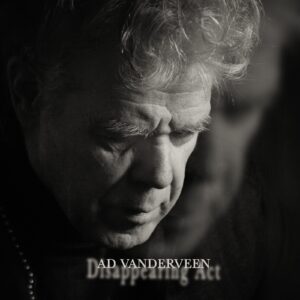
On Disappearing Act, acclaimed singer-songwriter Ad Vanderveen reflects on creativity, aging, and resilience. In this interview, he discusses songwriting, collaborations, and the inspiration behind his deeply personal new album.
1. Disappearing Act explores themes of reflection, acceptance, and perseverance. At this stage of your career, what inspired you to create an album that looks both inward and backward while still moving forward?
It’s where my life is, I follow the songs and how they come, there’s no preconceived idea or concept. Afterwards you can see a kind of theme or common thread.
2. The title track includes the line, “Still this disappearing act is failing gloriously.” What does that phrase mean to you personally, and why did it feel like the perfect title for the album?
Well, turning 70 and after all these years and albums you wonder when it’s the last. Despite the regular steady output, I don’t take what I do for granted and I’m well aware there comes a time to wrap it up. I guess I’m at a stage where I’m getting ready for that, rehearsing sort of.
Also, I’m celebrating that I’m still here and creativity is alive so I’m not disappearing yet.
3. You describe songwriting as something that “just seems to happen,” even leading to improvisational pieces during the recording sessions. How do you recognize when a spontaneous idea is worth developing into a finished song?
Interesting question. It’s a feeling, there’s no hard and fast rule but you know when something matters to you. A song comes from thin air and when it carries something that’s significant to you, you want to remember it and make it presentable. Sometimes it’s ready at birth, or almost, and other times it takes more time to complete it.
I had a session planned with piano player Rene Kaay and thought I’d get something ready to improvise and have fun with. So, I had some lyrics and two chords just to play with, first on my own and later with the ensemble.
We hit the record button and it developed into a song on the spot (If Words Were Notes). There was another one that was improvised on the spot as well, lyrics and all, but the album didn’t need any more slow pieces.
4. The album features a rich acoustic-based sound with contributions from a talented group of musicians, including a reunion with The Cotton Brothers. How did these collaborations shape the atmosphere and character of Disappearing Act?
For me a song first has to stand on its own two feet – that is, voice and the instrument it’s made on, which is acoustic guitar on this album. Then it’s a matter of what I hear in my head or who happens to be around to be added to the arrangement. I heard violin for this album and my long-time friend and violinist Jim Morrison was not available. So I started looking and reaching out to people and one morning in the market square of my hometown I heard this glorious fiddle sound. It was Moniek de Leeuw playing and improvising her lovely blend of folk music and I immediately invited her to a session.
The Cotton Brothers is another story, they were my first band and we had a reunion after 45 years. I had the song ‘Fun Funerals and Sad Saturday Nights’ ready and – us being a country influenced band – it was obvious we should do this track.
5. Many of the songs seem to embrace contradictions—retreat and engagement, gratitude and longing, simplicity and depth. Were there any particular tracks where these contrasts became especially meaningful to you?
I’m not really aware of that during the creative process, those are things you recognize afterwards, there’s no conscious effort or intention to do that. But in general I like contradictions, they put a perspective on things and can make it more layered and interesting.
6. After decades of releasing music and building a loyal audience, what do you hope listeners take away from Disappearing Act, and what continues to motivate you to keep creating and sharing new songs?
I have no idea or hope of what listeners will take away from it. Everybody creates their own thing according to where their mind and development is.
If people can relate that’s nice but it’s actually their individual experience they relate to, not mine.
What keeps me motivated? Good question and I don’t know the answer.
It’s like one of those early computer games where the landscape pops up in front of you as you go along. You just keep on going and see what presents itself. With this album I was reluctant to start the process of making a record. There had been silence for about a year and it felt good and peaceful. Then songs started coming but still I didn’t make a move, like trying to resist it. Then song # 6 came and kicked me in gear to start recording. Then it feels good to work on something only you know about in your own world and build it, eventually with the involvement and help of some great people. Then it’s time to release it and let it go; it’s a lot like having a child. Then it has a life of its own in the world and sometimes you hear back from them and think ‘did that come from me?’.
Copyright © 2026 The Interviewist

