Reviews
Disappearing Act review The Big Indie, US
There is something quietly defiant about an artist who has spent decades making music on his own terms and simply refuses to stop. Disappearing Act, Ad Vanderveen’s 2026 release, carries that defiance in its very title. The chorus of the title track acknowledges the contradiction directly: the attempt to retreat, to step back, to let go, keeps failing because the songs keep arriving anyway. It is a fitting entry point into an album that holds withdrawal and presence in the same breath throughout its eleven tracks.
Thematically, the record sits at a particular point in a life’s arc. Vanderveen is not writing from ambition or hunger for recognition here. He is writing from a place of reflection, gratitude, and a quiet reckoning with what has been built and what remains. The tensions between inward focus and the desire to still be heard, between acceptance and drive, between disappearing and showing up, run through the album like a current. It never resolves those tensions neatly, which is precisely what gives the writing its weight.
Instrumentally, the album is generous without being cluttered. Acoustic guitar and vocal form the foundation, with violin, pedal steel, piano, mandola, dobro, harmonica, and harmony vocals layered around them in a way that feels natural rather than arranged. Moniek De Leeuw’s violin adds a plaintive quality in the right moments, while Jan Erik Hoeve’s pedal steel brings a warm Americana drift that grounds the more reflective tracks. The reunion with The Cotton Brothers adds further texture, their presence lending a sense of shared history that suits the album’s contemplative mood.
Producer Daniel Shergold captures everything with an organic, unhurried quality that suits Vanderveen’s working philosophy perfectly. Two of the eleven tracks emerged improvisationally during the sessions, and that spontaneity is audible across the record as a whole. Nothing sounds labored. The performances feel immediate and unconditional, as though the songs were committed to tape at the precise moment they existed most fully. That approach carries genuine risk, but here it pays off consistently.
The inclusion of John Gorka’s “Particle and Wave (Goodness In The World)” sits comfortably within the album’s framework, reflecting a sensibility that values the right song over authorial ownership. Vanderveen’s interpretive instinct is strong enough that the cover feels like a natural part of the sequence rather than an interruption. The closing track “If Words Were Notes,” which also appears as an intro at the album’s opening, frames the whole record as a meditation on the relationship between language and music, thought and expression.
Disappearing Act is the work of an artist with nothing left to prove and everything still worth saying. That distinction matters, and Vanderveen earns it.
The Big Indie 2026
Q & A with the Interviewist
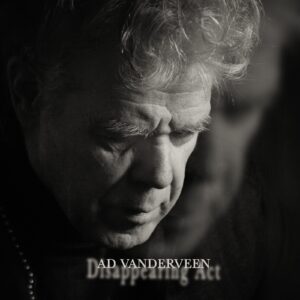
On Disappearing Act, acclaimed singer-songwriter Ad Vanderveen reflects on creativity, aging, and resilience. In this interview, he discusses songwriting, collaborations, and the inspiration behind his deeply personal new album.
1. Disappearing Act explores themes of reflection, acceptance, and perseverance. At this stage of your career, what inspired you to create an album that looks both inward and backward while still moving forward?
It’s where my life is, I follow the songs and how they come, there’s no preconceived idea or concept. Afterwards you can see a kind of theme or common thread.
2. The title track includes the line, “Still this disappearing act is failing gloriously.” What does that phrase mean to you personally, and why did it feel like the perfect title for the album?
Well, turning 70 and after all these years and albums you wonder when it’s the last. Despite the regular steady output, I don’t take what I do for granted and I’m well aware there comes a time to wrap it up. I guess I’m at a stage where I’m getting ready for that, rehearsing sort of.
Also, I’m celebrating that I’m still here and creativity is alive so I’m not disappearing yet.
3. You describe songwriting as something that “just seems to happen,” even leading to improvisational pieces during the recording sessions. How do you recognize when a spontaneous idea is worth developing into a finished song?
Interesting question. It’s a feeling, there’s no hard and fast rule but you know when something matters to you. A song comes from thin air and when it carries something that’s significant to you, you want to remember it and make it presentable. Sometimes it’s ready at birth, or almost, and other times it takes more time to complete it.
I had a session planned with piano player Rene Kaay and thought I’d get something ready to improvise and have fun with. So, I had some lyrics and two chords just to play with, first on my own and later with the ensemble.
We hit the record button and it developed into a song on the spot (If Words Were Notes). There was another one that was improvised on the spot as well, lyrics and all, but the album didn’t need any more slow pieces.
4. The album features a rich acoustic-based sound with contributions from a talented group of musicians, including a reunion with The Cotton Brothers. How did these collaborations shape the atmosphere and character of Disappearing Act?
For me a song first has to stand on its own two feet – that is, voice and the instrument it’s made on, which is acoustic guitar on this album. Then it’s a matter of what I hear in my head or who happens to be around to be added to the arrangement. I heard violin for this album and my long-time friend and violinist Jim Morrison was not available. So I started looking and reaching out to people and one morning in the market square of my hometown I heard this glorious fiddle sound. It was Moniek de Leeuw playing and improvising her lovely blend of folk music and I immediately invited her to a session.
The Cotton Brothers is another story, they were my first band and we had a reunion after 45 years. I had the song ‘Fun Funerals and Sad Saturday Nights’ ready and – us being a country influenced band – it was obvious we should do this track.
5. Many of the songs seem to embrace contradictions—retreat and engagement, gratitude and longing, simplicity and depth. Were there any particular tracks where these contrasts became especially meaningful to you?
I’m not really aware of that during the creative process, those are things you recognize afterwards, there’s no conscious effort or intention to do that. But in general I like contradictions, they put a perspective on things and can make it more layered and interesting.
6. After decades of releasing music and building a loyal audience, what do you hope listeners take away from Disappearing Act, and what continues to motivate you to keep creating and sharing new songs?
I have no idea or hope of what listeners will take away from it. Everybody creates their own thing according to where their mind and development is.
If people can relate that’s nice but it’s actually their individual experience they relate to, not mine.
What keeps me motivated? Good question and I don’t know the answer.
It’s like one of those early computer games where the landscape pops up in front of you as you go along. You just keep on going and see what presents itself. With this album I was reluctant to start the process of making a record. There had been silence for about a year and it felt good and peaceful. Then songs started coming but still I didn’t make a move, like trying to resist it. Then song # 6 came and kicked me in gear to start recording. Then it feels good to work on something only you know about in your own world and build it, eventually with the involvement and help of some great people. Then it’s time to release it and let it go; it’s a lot like having a child. Then it has a life of its own in the world and sometimes you hear back from them and think ‘did that come from me?’.
Copyright © 2026 The Interviewist
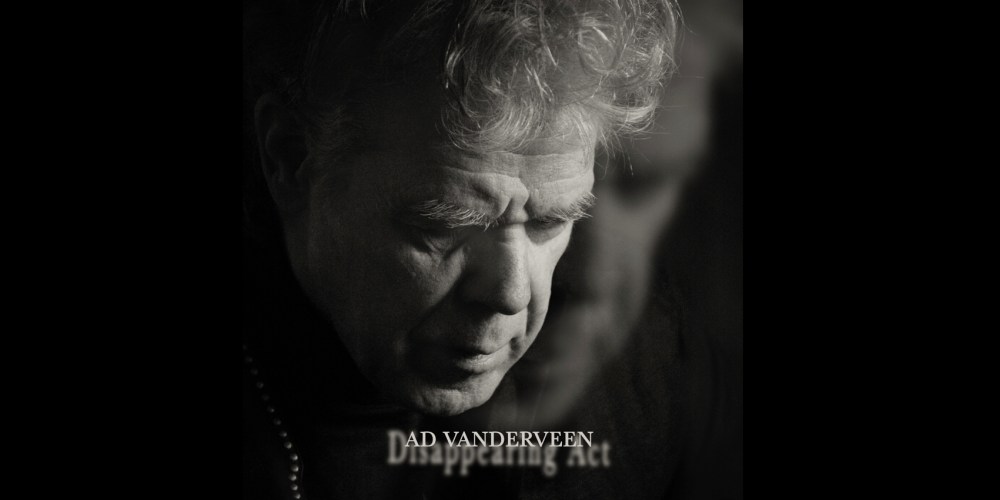
Disappearing Act – Ad Vanderveen
‘Still this disappearing act is failing gloriously’ the chorus in the title track on this album says, and it looks like 2026 is another year that singer-songwriter Ad Vanderveen does not manage to disappear.
His new record is as much about perseverance as it is about retreat and stepping back to reflect.
It’s a snapshot of a phase when the arc of a life’s work comes down to earth on the other end of hopes and dreams and the dots are connected, the pictures filled in.
It’s about acceptance and gratitude for dreams come true that you didn’t even see coming.
And it’s about focusing inward, having less and less to prove to the outside world, yet still having a drive to try and share the relevance of an inner world.
Contradictions and paradoxes like these weave like a thread through the album.
Musically the ten tracks on Disappearing Act are based on acoustic guitar and vocal, accompanied by violin, pedal steel, electric guitar, piano, mandola, dobro, bass, drums/percussion, and harmony vocals. There’s also a reunion with one of Ad’s first bands ‘The Cotton Brothers’ and all of it is captured in a natural and organic production.
The same hand-made and real-time M.O. that Vanderveen has employed in all of his work – and which also yielded the classic and timeless music that influenced him over the years – has shaped these unconditional in the moment performances, putting the songs and lyrics center stage in a no-nonsense delivery.
Ad Vanderveen is considered to be one of the most prolific artists in his genre although for him that has never been a goal – on the contrary. “I can’t help it, it just seems to happen” the singer songwriter says of getting the songs for his 2026 release. “Even when I don’t write, it just shows up during recording, as happened with 2 improvisational pieces in these sessions. It’s not with a mindset to make a record, I just follow creativity and inspiration and want to stretch that as long as I can because that’s the part I enjoy most. When the muse calls I have to obey and then my working motto is ‘no hurry at all, but no reason to stall’
If that leads to another year, another record with an unplanned regularity that might make people take it for granted, that’s ok. I do this for myself primarily, with no expectations but some hopes of reaching a like-minded audience and a group of dedicated followers.”
Disappearing Act will be released on CD April 17 and on streaming platforms May 2 2026, stay tuned for details.
Tracklist:
1 If Words Were Notes intro
2 Spots Of Time
3 Mystery Mountain
4 Disappearing Act
5 Particle And Wave (Goodness In The World)
6 Soliloquy
7 Will And Testament
8 Hunger
9 Holding On To You
10 Fun Funerals And Sad Saturday Nights
11 If Words Were Notes
(All songs by Ad Vanderveen, except 5 by John Gorka)
Produced by Daniel Shergold.
Additional mixing by Huib Elenbaas.
With:
Ad Vanderveen: vocal, guitars, harmonica, mandola
Kersten de Ligny: harmony vocal, percussion
Moniek De Leeuw: violin
Jan Erik Hoeve: pedal steel
Rene Kaay: piano, accordeon, organ
Dan Shergold: bass
Michael Kay: drums, percussion
The Cotton Brothers: Huib Elenbaas: vocal, guitar / Theo Houtkoop: guitar, vocal / Peter Paul IJkelenstam: drums, percussion / Jan Erik Hoeve: pedal steel, vocal
misc.press quotes
Press quotes US/UK/CAN
Having roots rock artists coming from all over the world is not an uncommon thing these days. The problem quite a few of these artists usually have is the deep understanding of the musical sources they are using.
Yet, when they do reach that understanding, they can come up with some outstanding music. When they do so, it is often because they don’t stick strictly to the cannons of folk, country or rock, but mix those elements freely, adding touches of pop or their native background to the mix to come up with something truly interesting.
That is exactly what Ad Vanderveen, native of Amsterdam, Netherlands has been doing for the last 15 years of his career.
Sure, Vanderveen takes cues from such greats as Bob Dylan and Neil Young, but obviously feels no genre restrictions when he’s making his music, drifting freely between country, folk and rock.
(Rock At Night – by Ljubinko Zivkovic)
—————————
The beauty of Ad Vanderveen’s artistry is it never feels like he is out of his depth musically. No matter what influences he incorporates, Vanderveen is firmly at the helm. And that is the true genius of this record.
(Screen Legion, US – by Spencer Elliott)
——————————
Folk troubadour Ad Vanderveen sings songs of the human condition with a wistful lilt and a perceptive voice. Culled from the preeminent folk influences of the 20th century, his tracks are heartfelt, vulnerable, and have an unfettered sense of sincerity and real-world exposition.
Vanderveen again proves his folk chops by writing a welcoming album that brings you to that home on the range. On this effort, he seems to have coalesced more of a signature sound relying less on the tropes of his forebears while still honouring the lineage.
(Music-News, UK- By Jon C. Ireson)
———————————
Superbly wrought, mirroring the exquisite aromas of Bob Dylan and Neil Young – a monumental work of art.
(Tattoo US – by Randall Radic)
———————————-
For most of this LP Vanderveen simply contents himself with majestic acoustic guitar sounds, so perspicuous in their tracking and manifestation they’re a delight to hear without any vocals whatsoever—although vocals certainly enrich them.
(Breaking and Entering, US – by Duece)
———————————-
A beautifully thought out record that pulls on the heartstrings when necessary, but overall is a warm and inviting listen. His vocals are able to portray the emotion in the lyrics with ease and because of his years of songwriting, he knows when a track needs to hold back or let loose a little. A lovely listen.
(Vinyl Chapters, US)
——————————-
With a legacy that’s easily traced back some 35 years, Ad Vanderveen has earned a reputation amongst his knowing devotees as an excellent and articulate journeyman, a man whose meditative musings find him respected on both sides of the folks/roots divide. Born in Holland but partly of Canadian heritage, his music transcends any singular tradition courtesy of his deeply melodious music, his deft instrumental interplay and a rich, resonant vocal.
(Goldmine, US – by Lee Zimmerman)
—————————————
Ad Vanderveen’s reflective musings give his songs a quiet charm that’s all but irresistible, one reason his work makes him the absolute epitome of an accomplished acoustic bard whose tools of the trade come in the form of a guitar, a melodious voice and a songs flush with heartfelt sentiment.
(No Depression, US – by Lee Zimmerman)
—————
Ad Vanderveen is Dutch. He lives in Amsterdam. And he sounds like a guy who has spent his life wandering around coffee shops in Madison. The accent probably comes from his Canadian parents (though I still think he sounds American, if possibly North Woods), and the music mainlines from 60s Neil Young.
These almost-acoustic pieces are enhanced by an electric lead guitar that often provides a melodic counterpoint to Vanderveen’s vocals. That, too, is a Young trademark, though Vanderveen’s playing is much more supple than the ragged wails of his hero.
These songs spin stories that are told both musically and lyrically. All of the pieces dovetail into some truly lovely and arresting climaxes. Vanderveen builds his songs with care and very little wasted motion. These well-oiled pieces satisfy immensely.
I’m always intrigued when sounds come back after spending some time overseas. In this case, Vanderveen’s take on this sound presents very few mutations. The fit with late 60s folk rock is exceptional. And while Vanderveen doesn’t experiment much with his influences, he shows a sure-handed mastery of the material. This is a work of remarkable beauty.
(Aiding and Abetting, US – by Jon Worley)

