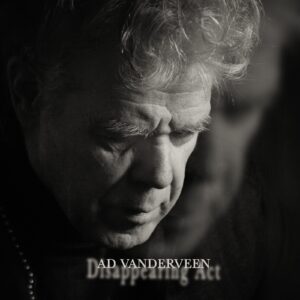
On Disappearing Act, acclaimed singer-songwriter Ad Vanderveen reflects on creativity, aging, and resilience. In this interview, he discusses songwriting, collaborations, and the inspiration behind his deeply personal new album.
1. Disappearing Act explores themes of reflection, acceptance, and perseverance. At this stage of your career, what inspired you to create an album that looks both inward and backward while still moving forward?
It’s where my life is, I follow the songs and how they come, there’s no preconceived idea or concept. Afterwards you can see a kind of theme or common thread.
2. The title track includes the line, “Still this disappearing act is failing gloriously.” What does that phrase mean to you personally, and why did it feel like the perfect title for the album?
Well, turning 70 and after all these years and albums you wonder when it’s the last. Despite the regular steady output, I don’t take what I do for granted and I’m well aware there comes a time to wrap it up. I guess I’m at a stage where I’m getting ready for that, rehearsing sort of. Also, I’m celebrating that I’m still here and creativity is alive so I’m not disappearing yet.
3. You describe songwriting as something that “just seems to happen,” even leading to improvisational pieces during the recording sessions. How do you recognize when a spontaneous idea is worth developing into a finished song?
Interesting question. It’s a feeling, there’s no hard and fast rule but you know when something matters to you. A song comes from thin air and when it carries something that’s significant to you, you want to remember it and make it presentable. Sometimes it’s ready at birth, or almost, and other times it takes more time to complete it.
I had a session planned with piano player Rene Kaay and thought I’d get something ready to improvise and have fun with. So, I had some lyrics and two chords just to play with, first on my own and later with the ensemble. We hit the record button and it developed into a song on the spot (If Words Were Notes). There was another one that was improvised on the spot as well, lyrics and all, but the album didn’t need any more slow pieces.
4. The album features a rich acoustic-based sound with contributions from a talented group of musicians, including a reunion with The Cotton Brothers. How did these collaborations shape the atmosphere and character of Disappearing Act?
For me a song first has to stand on its own two feet – that is, voice and the instrument it’s made on, which is acoustic guitar on this album. Then it’s a matter of what I hear in my head or who happens to be around to be added to the arrangement. I heard violin for this album and my long-time friend and violinist Jim Morrison was not available. So I started looking and reaching out to people and one morning in the market square of my hometown I heard this glorious fiddle sound. It was Moniek de Leeuw playing and improvising her lovely blend of folk music and I immediately invited her to a session.
The Cotton Brothers is another story, they were my first band and we had a reunion after 45 years. I had the song ‘Fun Funerals and Sad Saturday Nights’ ready and – us being a country influenced band – it was obvious we should do this track.
5. Many of the songs seem to embrace contradictions—retreat and engagement, gratitude and longing, simplicity and depth. Were there any particular tracks where these contrasts became especially meaningful to you?
I’m not really aware of that during the creative process, those are things you recognize afterwards, there’s no conscious effort or intention to do that. But in general I like contradictions, they put a perspective on things and can make it more layered and interesting.
6. After decades of releasing music and building a loyal audience, what do you hope listeners take away from Disappearing Act, and what continues to motivate you to keep creating and sharing new songs?
I have no idea or hope of what listeners will take away from it. Everybody creates their own thing according to where their mind and development is. If people can relate that’s nice but it’s actually their individual experience they relate to, not mine.
What keeps me motivated? Good question and I don’t know the answer.
It’s like one of those early computer games where the landscape pops up in front of you as you go along. You just keep on going and see what presents itself. With this album I was reluctant to start the process of making a record. There had been silence for about a year and it felt good and peaceful. Then songs started coming but still I didn’t make a move, like trying to resist it. Then song # 6 came and kicked me in gear to start recording. Then it feels good to work on something only you know about in your own world and build it, eventually with the involvement and help of some great people. Then it’s time to release it and let it go; it’s a lot like having a child. Then it has a life of its own in the world and sometimes you hear back from them and think ‘did that come from me?’.
Joyce Brumbaugh is a music lover and writer from Kalamazoo, Michigan. That’s where two of my Gibson guitars were made around the time I was born. Joyce is currently putting together a biography of Orville Gibson. She asked if I wanted to talk about my guitars and music and I was happy to comply.
I’ve been listening to Ad Vanderveen’s music for close to 25 years. Back in 2000-ish, he and Iain Matthews were touring Europe. I had been to several of Iain’s solo shows in the 90s when he was in Michigan. I was also a member of one of his fan sites. It was Iain who put me in ’email’ contact with Ad because we both love Neil Young’s music. Of course, I started buying up his CD’s. I remember each time folding a twenty-dollar bill into a note telling him which album I wanted. Ad was born and raised in the Netherlands, but he had relatives in the Great Lakes region of Canada and often ventured into Michigan. He told me that he would have occasion to use the foreign currency.
Ad is an exceptional guitar player. He’s no slouch on the piano, either. The thing that stands out to me, is that there is as much to listen to in his playing as there is in his lyrics. His voice, his instrumentation and his songwriting are a nicely balanced package. He also knows how to make distortion his bitch. I never tire of it. I’m guessing it’s the unapologetic reverberation that those hollow bodies deliver.
Something else that drew me to his music was that he writes about difficult situations. Though the topics may differ between men and women, that need to feel unencumbered is universal. Several years ago, I found myself in a new and difficult to navigate situation. I put on ‘Wonders of the World’ thinking about how I hadn’t listened to it in a while. I’ll be damned if the first song wasn’t ‘Start a New Life.’ Many of his songs are like guardrails. On a rocky and uncertain path? Listen to him. He’ll tell you his stories.
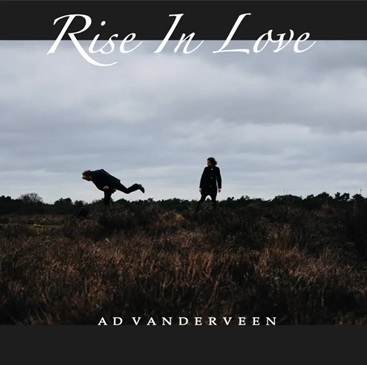
Ad released a new album this past April called ‘Rise in Love.’ I listened to it for the first time while working on my writing. I particularly like “Can’t Cross Over,” “Good Life,” and “Best for Last.” Like an old friend, I recognized the opening notes of “Forgiveness.” I put my pen down to listen. His songs have held up well over the years and he continues to do good work
Since Ad plays both electric and acoustic Gibsons, I thought I would ask him about them. Here’s what he had to say…
Joyce: I think I’ve asked you this before, is that your mom on “Train?” I smile every time I play that track.
Ad: No, that’s Timon, our guitar player’s young kid who was in the studio. He was yelling and I remember we liked the vibe on the track so we kept it on there.
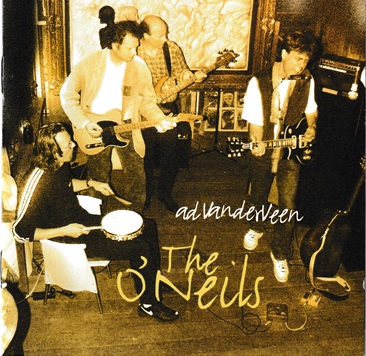
Joyce: That’s great. I think Timon was channeling my mom when she would yell down the basement stairs at my brothers. There are readers who will take one look at the cover photo of The O’Neils and know exactly what model Gibson you’re playing. For the rest of us, would you tell us about that guitar? How often do you use it on your other material?
Ad: That’s a Les Paul standard. It’s a pretty straight forward off the rack guitar from the early 80s and it has served me well for the loud parts of my music. It’s funny on a studio session in Nashville once they told me it sounded like a Gretsch, which they didn’t know is what I mostly play. I guess that sound is in my head and hands. I put Filtertron pick ups on the Gibson later to make it more compatible with my old Gretsch. For the O’Neils loud garage band stuff, the Les Paul is best. It’s in its case now since the last loud gig more than a year ago, still sweaty and with broken strings and all. I won’t do that anymore and will preserve what is left of my hearing for acoustic stuff. I suppose there will be a place for the Gretsch in the future still, it blends well with acoustic based music.
Joyce: I like your use of distortion on songs like “Crazy Moon.” The effects vary and are not one dimensional. Plus you seem to really lean in to it. I’m glad you’re taking care of your hearing. A word of caution, if any readers out there play the reprise of “14 turns 41” on their laptop, turn the volume down first. Those tiny speakers won’t know what hit them. What is it that you like about Gibsons? What qualities and features do you look for?
Ad: Yeah for me, if it’s electric I want it to be dirty. I love to improvise that way, forget about time and get a little free and crazy with feedback and all. It gives release to something I can’t express any other way, I guess it’s anger. As a vocalist I’m mellow but with the electric I can scream. I’ve realized at times that the timbre of that tone is like a violin, I love playing with violin and harmonizing with my friend Neil James Morrison on fiddle. It has been one of the pleasures of my life.
Ad and his Gibson J45 Banner.
Speaking acoustics, I’ve gravitated toward Gibsons ever since they gave me an endorsement deal in Nashville in ’91. I got a great deal on a very fancy Jumbo then, which kind of became my starting capital. I’ve traded and owned quite a few guitars since then, also Martins and some boutique brands. I love the sound of a good Martin in someone else’s hands but for myself Gibsons generally fit better. I once heard a comparison that a Martin is like a grand piano and a Gibson is like an upright. That makes sense, although my Gibsons can take on any Martin, too. I don’t like the thought of being loyal to a brand, guitars are individual. But to illustrate with a little story: once when I was touring in the US with Iain Matthews, my guitar got broken on the flight. So I had to go and get one and realized that not any guitar would do. It’s not simple when you’re a lefty, we went to Guitar Centers and what have you and soundcheck was at 17.00, so at gunpoint I had to decide. With so little time to compare I headed for the Gibson corners. I came away with a nice J185 from a store outside of Philly that I’ve played for 18 years. But this goes to show that Gibson is instinctively my first choice.
Joyce: Do you remember what venue you played in Philly? Back in the mid 90s, I saw Iain at an old brick coffeehouse called ‘The Point’ in Bryn Mawr, a few miles northwest of the city. It was a wonderful place, except they had a blender from hell. The bartenders were considerate enough not to use it during a song, but the second it ended we all knew that blender would go off. It sounded like all the parts and pieces were about to come loose and fly across the room.
Ad: Exactly, that’s the one. I believe it used to be called ‘The Main Point’. I used to listen to bootlegs by Jackson Browne and David Lindley that were recorded there and felt thrilled to play that place. Just across the road was a guitar store called Medley Music where I bought that J185.
Joyce: Do you have a favorite guitar shop that you buy from?
Ad: Not really, I take them where I find them. Being a lefty narrows the choice so I’ve always been alert, sort of. Now I’m covered, I pared down and traded in all very good guitars for 2 really great ones. I also realized there’s less time to wait until instruments age so I got one that’s my age, which is Ol’ ’56. We have a great match. Also I have another ’56 Kalamazoo, it’s an LG 3/4 that I use for high strung Nashville tuning and it sounds terrific. I love the mahogany old Gibson sound, crisp, woody, thumpy and shimmery. How do you describe sound? I love the sound of a good rosewood to listen to, but to play I prefer mahogany.
Joyce: Absolutely. It amazes me what truly creative people can produce from only the basics. As far as sound, I play an Alvarez that has a naturally mellow sound to it. I want strings that are not too tin-y, not too marshmallow-y.
Ad: Well so do you, from what I’ve heard. I thought you’d be playing a Gibson there.
Ol ’56. A Gibson J50.
Joyce: Oh, my goodness. Thank you. My Alvarez is a 1976 that I bought new in 1978 from a local guitar shop. I heard someone else play theirs and thought it was a good tone for my timid voice. Mellow and round-y without any sharp edges. I love it. Orville forgives me, sort of, not really. Maybe I should buy a Gibson before I go out on any speaking engagements for my book. Anyway, tell us about “Ol’ 56?”
Ad: Ol’ 56 is a J50, which is blonde. It’s my go-to for recording and writing, and sometimes I take it out to gigs as well. My main road guitar is a J45, which is sunburst. It is modeled after a 1942 version, sounds great and is easiest for amplified situations.
Joyce: You’ve recorded with a mandola. Many bands go through a mandolin phase. R.E.M., Bill Monroe (I’m joking!). Maybe it suited your vocal range better? Tell us about it.
Ad: I traded in a Guild 12 string for a lefty mandola and banjo and really got to enjoy a discovery trip during the pandemic. I got very pleasantly lost and found on the mandola and it turned into songs. It’s a very inspiring sound and the 5ths tuning led to some surprising changes. Usually, words lead the way for me but I suppose the mandola bedding made things ring differently. But in general, a 6 string acoustic in standard or drop D tuning make my days just fine. It’s amazing how those simple chords and sounds keep bringing magic and continue to fascinate me.
Joyce: That’s an inspiring story. Thank you for that. I would have loved to have attended a show when you opened for Van Morrison. I’ve read that he has long suffered from stage fright. I have as well. I remember seeing him on David Letterman after many years absence from recording. He shook so badly he had trouble holding his guitar. What did you take away from being so close to him and his music?
Ad: As a long time fan, I felt greatly honored to get his personal invitation. I had a great time, it was at an old palace where the royal family used to live and we got to use their old cinema as our dressing room, with all their stuff still laying around there. I met Mr. Morrison briefly in the halls before he went on stage and thanked him. He struck me as being vulnerable and kind. I saw his other side when he scolded his bass player onstage. I think he has a lot of pressure on him, which is what a certain status brings. I felt lucky to travel light and have little machinery to answer to and take care of.
Joyce: Oh, dear. Yes, that kind of scolding is uncomfortable for the audience to witness. I’ve seen it and heard stories of other big-name performers doing that. I’ve read that after your early bands, you hadn’t planned on becoming a vocalist. I want to mention that Nat King Cole hadn’t planned on being a vocalist, either. He had to be talked into it. Is there anything you miss about playing without having to carry any vocals?
Ad: I’m a songwriter-singer, so to speak. I sing because I write and couldn’t depend on others to make my songs come to life. I’ve started enjoying it more and more over the years and couldn’t imagine going without it now. I wish I had someone who could carry my tunes on guitar the way I do myself. That would free me up to play and improvise. It’s a very important and under-estimated role, that of rhythm guitarist. But as for folky acoustic stuff I’m very happy to be self sufficient.
Joyce: What have you been up to lately?
San Sebastian, Spain
Ad: I’m just back from a trip to Spain where I wrote two and recorded ten new songs in all. I had my Gibson LG American Eagle with me, which is my travel guitar. It sounded great recording in a room with a nice ambience and windows all around, one side facing the ocean and the other overlooking the Camino de Santiago. Every day I would look at the pilgrims walking by and talking to some of them it was inevitable that I got a song about that. Now I wonder what I’ll do with this bunch. Part of me wants to put it out as is, but maybe some additions will be made and who knows if a suitable producer would step in it could evolve further.
My problem is that I’m too productive, even though half a year can go by that I don’t write, before I know I find myself with a group of songs that wants to go somewhere. I just have the new Rise In Love album out and took a long time with the recording of that to give some space to the previous one. But the Muse just won’t wait and when it comes knocking I have to answer. So here I am with a new collection that seems to have its own distinct unity and vibe. I try to stretch it because you can’t knock on the same doors too often, people can’t keep track. Going by the timing and dictates of any music business is very discouraging and counter-creative, so I have to remind myself every time why I do this and who for. I don’t expect anyone to keep up,
I do it for the love of it, for myself, and fortunately there’s a small group of dedicated followers. Anyway there’s always a delay before an album materializes so we’ll see what happens.
Joyce: Ah, that’s something you have in common with Neil Young. I’ve heard that if he never writes another word he could still release new material for the next twenty years. I, for one, would like to thank you for not being able to give in to a formulaic process. All that human-ness feeds the soul. It gives our ears lots to listen to and our hearts lots to mull over. I’ll keep an eye out for a tour date near me. Thank you for your time, Ad.
I’ve recorded two of Ad’s songs, “First Feeling” and “Old Friend,” along with an Iain Matthews song that can be found here https://joycebrumbaugh.com/in-the-studio/
An interview with singer-songwriter Ad Vanderveen.
The joy in your playing has brought joy to so many others, including and especially me. What do you think is its secret?
IT’S ALWAYS GOOD TO HEAR IT BRINGS JOY, IT COMES FROM JOY AND IT’S FROM THE HEART.
What are the experiences of your life that led you to see music as a spiritual endeavor?
MUSIC IS LIKE A THERAPY AND THAT LEADS TO MORE SELF-KLOWLEDGE AND SELF-KNOWLEDGE LEADS TO SPIRITUALITY.
Life is more than just music, is there any other field that has influence on your music?
ALL OF IT, ALL EXPERIENCES. YOU NEVER KNOW WHICH IN PARTICULAR WILL TRANSLATE INTO MUSIC.
Where does your creative drive come from?
GOOD QUESTION. NOT SURE I KNOW THE ANSWER.
But in your formative, figuring things out, years, whose sense of rhythm did you admire? Who has impacted you rhythmically?
MOSTLY ROCK’N’ROLL AND BLUES RECORDS.
What are you doing to keep it relevant today, to develop it and present it to the youth?
NOT MUCH, JUST TRYING TO STAY IN SHAPE AND IN TOUCH WITH MY INNER WORLD.
Do you have any interesting stories about the making of the new album?
I WORKED CHRONOLOGICALLY, FOLLOWING THE SONGS AS THEY APPEARED. IN THAT ORDER THE ALBUM IS ALSO SEQUENCED, EXCEPT MAYBE ONE OR TWO. AS I ALWAYS WORK, IT’S MOSTLY FIRST TAKES AND REAL TIME.
Do you share the opinion that your live albums are some of your best records? What is it about you and your music that works so well for live recordings?
IF THAT’S THE CASE IT COULD BE THE REAL TIME COMMUNICATION FACTOR, AND THE FACT THAT SONGS EVOLVE THROUGH TIME. MY STUDIO RECORDS ARE USUALLY THE FIRST PERFORMANCES OF THE SONGS, AT THE POINT IN TIME WHEN THEY ARE NEW AND FRESH AND CLOSE TO THEIR SOURCE. THERE’S A GREAT VALUE IN THAT I THINK, BUT SOMETIMES IT ISN’T UNTIL LATER THAT THEY COME INTO THEIR OWN.
And how did you select the musicians who play on the album?
THEY ARE MOSTLY OLD AND TRUSTED FRIENDS. I VALUE COMMITMENT AND RELATIONSHIPS MORE THAN VIRTUOSITY AND SKILLS, ALTHOUGH YOU CAN HAVE BOTH TOO SOMETIME
How have you managed to so successfully pull so much of your life and personality through so much of your music?
IT TAKES A STRONG DREAM AND WHERE THAT COMES FROM I DON’T KNOW. AND THERE’S HELP THAT I’VE BEEN GETTING OVER THE YEARS. FOR SOME REASON I’VE HAD THE GOOD FORTUNE TO GET GOODWILL FROM PEOPLE IN RECORDING, DESIGN, PLAYING, AND BUSINESS AREAS.
Did your sound evolve during that time?
I THINK IT HAS AND IT’S UNPLANNED. YOU FOLLOW WHAT YOU HEAR IN YOUR HEAD, THE SONGS, THE RECORDING CIRCUMSTANCES, THE PLAYERS. FOR SOME REASON EACH RECORD GETS ITS OWN DISTINCT IDENTITY, ATMOSPHERE AND UNITY.
What´s been the highlights in your life and career so far?
MOSTLY LIVE SITUATIONS AND TRAVELS, THEY GET THE MOST INTENSE. RECORDING WITH MY FAVORITE PLAYERS IN NASHVILLE WOULD HAVE BEEN ONE.VAN MORRISON’S INVITATION TO OPEN FOR HIM IS ANOTHER. BUT EACH TOUR IS A HIGHLIGHT ACTUALLY. AND EACH ALBUM IS A UNIQUE ADVENTURE TOO.
Your life is an open book or that your life is always open to new experiences, or something else?
IT ISN’T REALLY, I’M A VERY PRIVATE PERSON. BUT SONGS DRAW OUT WHAT I NORMALLY WOULDN’T SHARE AND I GO WITH IT, SORT OF.
What would you say characterizes Jazz scene in comparison to other local scenes and circuits?
NOT REALLY FAMILIAR WITH A JAZZ SCENE, OR ANY OTHER.
Do you think there is an audience for young people to become future audiences and fans?
I LIKE TO THINK THERE IS ALWAYS AN AUDIENCE FOR GOOD HONEST MUSIC THAT COMES FROM THE HEART, FOR OLD AND YOUNG.
(From a previously unpublished promotional interview, May 2024.)
(Introductory notes by Jon C. Ireson / Music-News)
In the realm of modern folk rock, two men stand as pillars influencing the generations who follow. Bob Dylan took the influence of Woody Guthrie and Hank Williams and through the magical transformation of the Greenwich Village stages, made it speak to millions of young adults grasping for sense in senseless times.
Neil Young rose to fame riding a wave of psychedelia with Buffalo Springfield operating out of L.A.’s famous Laurel Canyon. Yet, in his formative years on the Canadian Great Plains, Young drew a lot from Dylan’s early folk masterpieces. Once the great wave of the ’60s broke, Young would turn hard to folk in the ’70s writing some of his most enduring classics.
Today, there is a great deal of that DNA in any given performer that takes up the acoustic guitar to bare their soul.
Amsterdam-based Ad Vanderveen may have been born thousands of miles from Ohio or Ontario, Minnesota or Manhattan but the man has the lineage of these folk troubadours in his blood. This must have something to do with his Canadian family. On his latest record Release, Vanderveen powerfully and effectively channels the two greats, blending their sonic traits with his own worldly personality to create an album that hits all the right notes of nostalgia, reflection, love, and sense of home that a great folk record should.
This is an artist who studied under the best in his field and with that same energy, produced a welcoming, wistful, and wise entry in the tradition of great folk music.
Candle To You comes on the heels of the internationally acclaimed 2021 album Release. It offers ten new songs with a distinct sonic signature and atmosphere that is slightly different from Vanderveen’s other work.
AV onCandle To You: “The title-track can be considered a humble dedication to both men mentioned above, as well as some other heroes who came before. A tribute while still alive, if you will. As a child of the sixties, growing up in the second line of that revolutionary generation, I see myself as a carrier of the same flame. I’m grateful to see those greats in the frontline still ahead out there today.”
“While some songs are typically acoustic guitar based, a lot of this album was written on the mandola – the mandolin’s older sister,” the singer further explains. ”Exploring this instrument led to new horizons and different harmonic settings that seem to emphasize the spaciousness and fluidity in my music.”
Add to that some joyful reunions with old friends on pedal steel, violin/viola, electric guitar, bass and drums/percussion, and harmony vocals and the result is a natural, open and spontaneous sounding production that marks a sense of renewal within the singer-songwriter’s oeuvre.
As said above, music never comes out of nowhere and is always influenced and inspired by those who came before, but lyrics are something else and Ad Vanderveen very much has his own story to tell. It’s a story of a lifelong search that has a sense of home running through it. One can suspect that over the years he has been closing in on something, although it’s not spelled out literally what that is. It’s a quest of the spirit that holds a promise of finding and coming home, a feeling that many – consciously or subconsciously – may relate to.
The poetry always central to Vanderveen’s work often hints at a bigger picture, expressed through every day events and language, with subjects relevant in any grown-up’s life like; love on individual and universal levels, longing, loss, transience, and acceptance.
With: Ad Vanderveen: vocal, guitars, mandola, harmonica, footstomp / Kersten de Ligny: harmony vocal / Jan Erik Hoeve: pedal steel / Neil James Morrison: violin, viola / Pete Fisher: bass, percussion / Michael Kay: drums, percussion / Simon Moore: keyboards / Philip Kroonenberg: guest vocal on 3
Track list:
1 Do What You Love 2 Following The Wind 3 Over Time 4 Candle To You 5 Last Venture 6 All The Way Thing 7 Window In The Rain 8 Miss That World 9 Exit Inside 10 Air Guitar
Though born in Holland, Ad Vanderveen has Canadian parentage. It shows through in his musical influences—one can trace touches of Neil Young or Jackson Browne in the strum of Vanderveen’s guitar, or in his earnest croon. He’s got a rich career to show for his chops, too, having been working at it as a solo artist since the early 90s. He’s shared the stage with a swath of noteworthy performers, to boot, from Eliza Gilkyson, to the late, great David Olney, and Van Morrison.
Vanderveen’s latest, Release, sees the Dutch singer-songwriter navigating pristine, organic production, finding beauty in sparse acoustic settings. As his musical stylings have changed, so has he—with his goals, his outlook, and who he is as a person. For Folk’s Sake is privileged to have him join us as the latest in our ongoing ‘FFS 5’ series.
Please tell us a bit about yourself. Where are you from and how did you get started in music? Any defining moments along the path to present day?
I’m from the Amsterdam area in The Netherlands and was drawn into music in the 60s. As for so many, the sounds and impact of rock’n’roll were life-changing to me. British bands at first, later crossing over to American music, discovering singer-songwriter stuff, and then digging back into the roots where I feel my music belongs. I’ve often wondered about geography and musical roots, the music that comes out of me has more of a connection to the Canadian side of my family. Also a lot of my favorites are from there.
I’ve been playing in many bands before finding my own voice as a singer-songwriter in the early 90s. Songs are what’s always driven me. Writing and playing the guitar are a necessity and seem to go on throughout my life. It made me have to become a singer too, although reluctant at first. I wouldn’t play a center stage role if the songs weren’t commanding it.
As an artist, how do you define success?
That has been a changing process…success in any case is a very fleeting and relative thing that you can’t really measure. Unless you want to judge by just numbers – but even then, I’ve witnessed people feel like losers because they sold ‘only’ 7 million cd copies.
I have an old friend I hadn’t seen for 40 years who was in the record business, stoking the star making machinery, in Joni Mitchell’s words. He asked me: how has it been, a life in music? I answered: well, not a success story exactly but…what do you mean, he interrupted, you did it, you still do it, that’s what I call success! That really stuck with me.
A lot of what people call success is actually a heavy burden. I’ve had a peek into Van Morrison’s life once when he had invited me to open a show for him. I can’t say I envied him, it felt like his own machinery just weighed him down, having so much to live up to and to control. Compared to that I travel light, no one to answer to, free to do just what I want. Of course that can be a lonely path too, there’s always a tradeoff.
What do you find your greatest struggle to be when it comes to the music business?
Business? I don’t see it as a business, I just concentrate on the music side of things. I know there’s people hovering around it that can make it go places but it’s such a fickle world that I can’t keep my attention in it. The hardest thing is when you have expectations of people actually living up to their words and promises, that can be very disappointing and this scene is a good therapy to let go of that. And I mean that as a good thing actually, from a human point of view. It’s a good lesson to learn to create, work and give, without expectations or calculation of getting something in return. That’s where you find the true motive and purity.
What do you think is the most realistic goal you can achieve as an artist and as a band? What do you hope to achieve?
That ties in with the success question a bit – I hope to be able to continue doing what I do and sharing it with people, regardless of their numbers. As long as I can make a modest living , I’m happy.
Outside of music, what do you like to do that you feel contributes to the creativity that you tap into for your music?
Meditation, walking, reading, sauna, keeping myself and my instruments in good condition.
“A musician or songwriter, or any artist, is a person first. You live your life as conscious as you can so you learn and take that with you in anything you do. and of course it comes through in art.”



You must be logged in to post a comment.